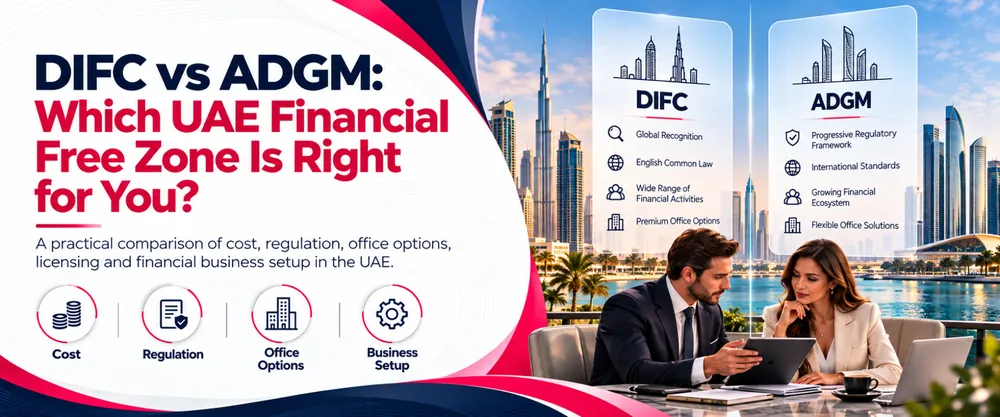


This page explains the three routes, what the Central Bank asks for, and how the steps run. If you are still choosing between onshore and a financial free zone, read our comparison of DIFC and ADGM first.
Who regulates what
| Route | Regulator | What it lets you do |
|---|---|---|
| Onshore (mainland or a non-financial free zone) | Central Bank of the UAE | Broker insurance for UAE risks and UAE clients |
| DIFC | Dubai Financial Services Authority (DFSA) | Insurance intermediation as a DFSA authorised firm, within DIFC rules |
| ADGM | Financial Services Regulatory Authority (FSRA) | Intermediation of risks located outside the UAE, and risks located in ADGM |
ADGM material states that intermediation of risks located in the UAE is not permitted from ADGM. The DFSA and FSRA frameworks also differ from the Central Bank's in capital, conduct and reporting rules, so choose the route from the business you will actually write, not from the office address you prefer.
When this is the wrong route
- You want to sell policies to UAE residents and companies from DIFC or ADGM. Use the onshore Central Bank route instead.
- You only want to refer leads to a licensed broker. Referral models can still count as regulated activity depending on what you do. Confirm with the Central Bank before you advertise.
- You want to be an insurer, not a broker. That is a different license with much higher requirements and is outside this page.
What the Central Bank asks for onshore
The Central Bank's Insurance Brokers' Regulation says no one may provide insurance brokerage in the UAE without a Central Bank license. As reported from the rulebook, the main conditions are:
- Applicant type. A UAE company formed for brokerage, or a branch of a free zone or foreign broker. Branches face additional conditions, including prior brokerage experience under supervision.
- Capital and guarantee. The Central Bank sets minimum capital, with different levels for a UAE broker company and for a branch of a free zone or foreign broker, plus a bank guarantee in its favour. It can ask for more. We do not quote the amounts here because published summaries differ; we confirm the current figures in your written quote.
- Professional indemnity cover. Cover must be in place with the Central Bank named as beneficiary. The required amount depends on the type of broker and is confirmed with the Central Bank.
- People. Fit and proper checks for shareholders, directors and senior managers, and at least one specialised employee for each line of insurance you broker. Representatives and managers must meet qualification and experience thresholds and complete annual continuing professional development.
- Application papers. A business plan, conflict of interest and outsourcing policies, cyber security arrangements, an Emiratisation plan and beneficial ownership details.
- Term. The license runs for one year and is renewed ahead of expiry. The broker must obtain its local licenses and start operating within a set period after approval.
We could not open the rulebook pages directly when preparing this guide, and older Insurance Authority resolutions with different figures still appear online. Treat every number above as a pointer and confirm it against the current regulation before you plan funding.
Step order onshore
- Choose the lines of business. General, health, life and family takaful each need suitably qualified staff. This drives hiring and cost.
- Prepare the corporate structure. Decide whether you will form a UAE company or open a branch. Our mainland company formation in Dubai page covers the commercial side.
- Assemble the staff and shareholder file for the fit and proper process.
- Arrange the guarantee and indemnity cover with banks and insurers that will deal with a company not yet licensed. This step often takes longer than the application itself.
- Apply to the Central Bank through its broker registration service, with the business plan and policies.
- Obtain the trade license and premises approvals once the Central Bank grants its approval, then complete final registration.
The exact sequence between initial approval, trade license and final registration can change. Ask the Central Bank to confirm the current order.
DIFC and ADGM in practice
In DIFC, intermediaries are authorised by the DFSA. A broker that handles client premiums needs an extra endorsement for insurance monies, and one that sells long-term insurance needs a further endorsement. Professional indemnity cover is risk-based and must be continuous. In ADGM, insurance intermediation is a regulated activity requiring a Financial Services Permission, and applicants complete the FSRA's insurance business supplement.
Capital and fee figures for both centres are quoted differently across sources. We do not publish one here: confirm it against the current DFSA or FSRA rulebook.
Common reasons applications are delayed
- Indemnity cover or bank guarantee not arranged before filing.
- No qualified specialised employee for a line of business you listed.
- A business plan that lists lines of business the staff cannot support.
- Shareholder documents from abroad that are not attested or complete.
- Starting with a DIFC or ADGM entity and discovering later that onshore clients are out of scope.
Frequently asked questions
Is the Insurance Authority still the broker regulator?
No. The Central Bank took over insurance regulation. Older guides citing Insurance Authority resolutions are out of date.
Can a foreigner own an insurance brokerage in the UAE?
The Central Bank sets ownership and fit and proper conditions, and older rules required national shareholding. Confirm the current position for your structure with the Central Bank before you apply.
Do I need a license to be an insurance agent rather than a broker?
Agents and brokers are treated differently, and agents act for an insurer rather than the client. Check the current Central Bank category for what you will do. We have not verified agent rules in this guide.
Can a DIFC broker sell motor or health cover to UAE residents?
Not from DIFC or ADGM on the basis of those licenses. Onshore business needs Central Bank registration.
Does the Central Bank decide how long it takes?
Yes. We cannot give a reliable number, because the guarantee, cover and staffing steps usually sit outside the regulator's own review time.
How DIAC helps
We help you choose between the onshore, DIFC and ADGM routes, build the staff and document file, coordinate the company formation and prepare the application. We do not guarantee approval, because the Central Bank, DFSA or FSRA decides. For an itemised written quote, contact us with the lines of business, your target clients and your shareholder structure.
Official sources
Check current fees, rules and forms with the issuing authority before you apply. Each link opens the authority’s own website.